
In Trieste, the “Italian Espresso Capital,” the aroma of coffee permeates the air like a promise of daily pleasure. For over three centuries, this seaside city has preserved a coffee-making tradition unique in Italy: a strategic commercial crossroads for the coffee supply chain, home to ancient literary cafés frequented by writers Svevo and Joyce, and today a forge of excellent roasteries.
It is in this context that, in the early 1960s, Dionisio Bazzara decided to found the eponymous artisanal roastery — giving life to a brand that would bring Triestine elegance and mastery to the world.
Founded in 1966, Bazzara is now a Benefit Company that has grown from a family laboratory into an international brand present in over 25 countries.
Thanks to distribution through the HoReCa, online, and retail channels, the brand aims to bring “Made in Italy” to the world, transforming the daily gesture of coffee into an accessible luxury experience.

Included by Forbes Italia among “the 100 excellences of Italian food & beverage,” Bazzara has become synonymous with quality, culture, and refinement.
Its Dodicigrancru, Panarabica, and Rarity lines — the products that make up the luxury coffee line — have won the prestigious recognition as “Selection Coffee” at the Luxury Food&Beverage Quality Awards in 2023, 2024, and 2025, respectively.
The master roasters select only the best coffee varieties, slow-roasting them in small quantities to enhance their aromas and complexity.
From balanced blends to the rarest single origins, every Bazzara coffee tells a story of artisanal passion and the pursuit of excellence. Bazzara coffee is available in whole bean, ground, and convenient single-serving formats (capsules and pods).
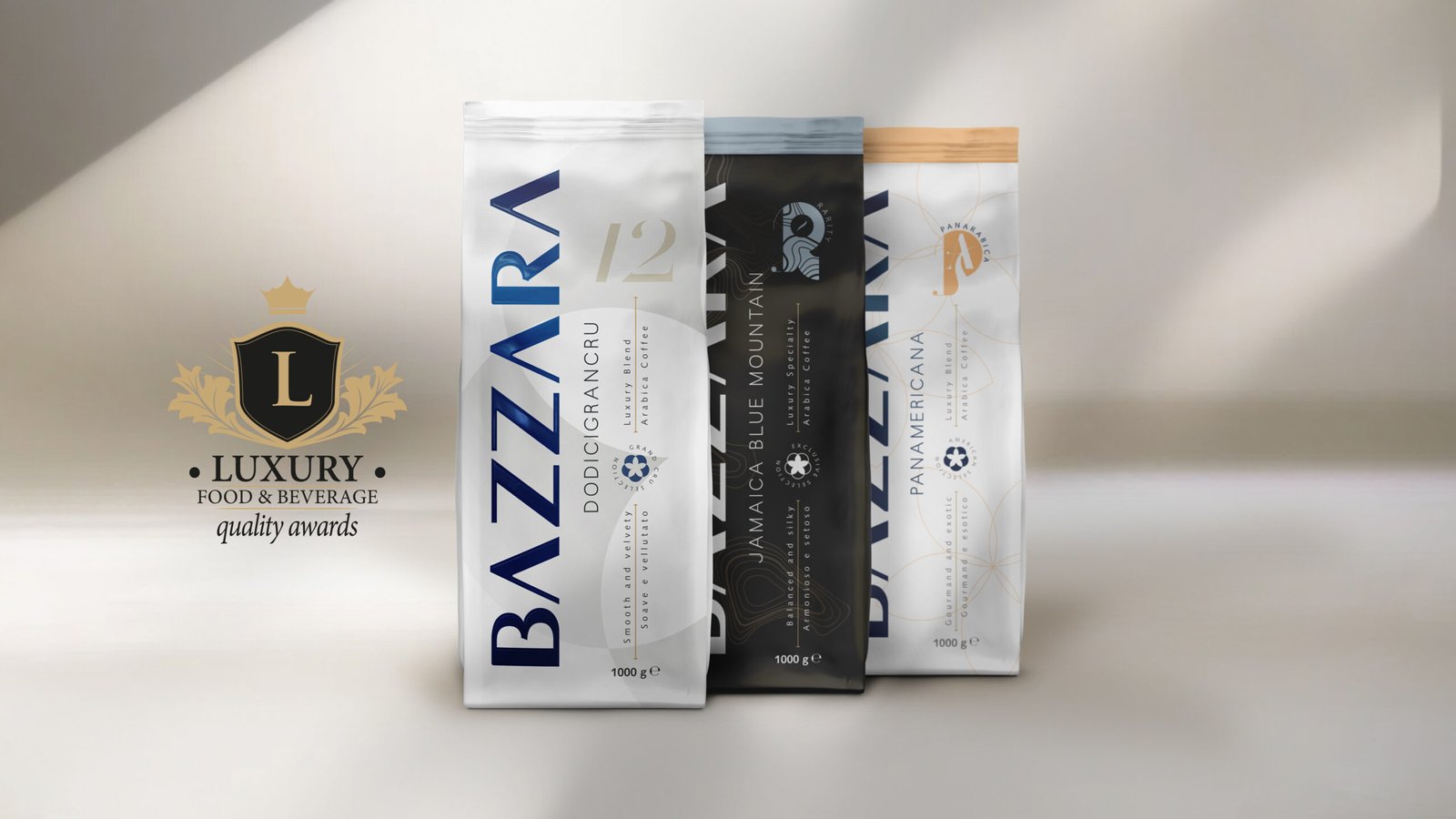
Among the most iconic coffees are:
Dodicigrancru: a journey around the world in a cup, where twelve of the most prized Arabicas worldwide merge into an unrepeatable harmony;
Panarabica: a trilogy of blends that encapsulates the most authentic flavors of the three coffee continents — America, Africa, and Asia;
Rarity: a collection that brings together three authentic icons of the coffee world, rare and precious. Panama Geisha — refined and silky, with a delicate body reminiscent of tea; Nepal Himalaya — a pure harmony of aromas and flavours that reflect its pristine land; and Jamaica Blue Mountain — famous for offering a unique sensory experience and being transported in wooden barrels like rum.
These are complemented by the Italian Blends line, which reinterpret the tastes of different regions of Italy by balancing Arabica and Robusta; the Single Origins, which highlight the aromatic nuances of each terroir, similar to wine; and the Organic and Fairtrade selections, dedicated to those who seek excellence while respecting the environment and people.
Learn more at https://www.bazzara.it/en/ or visit the Bazzara stand at Gulfood (January 26-30, 2026) in Dubai (Dubai World Trade Centre, Pavilion: Za’abeel Hall 6, Stand: Z6-C27).