Walk into any cold room and one thing becomes immediately clear: the shelving system defines how well that space functions. It’s not just about finding somewhere to stack boxes. The shelving you choose affects daily hygiene routines, how efficiently your staff works, and whether your operation still runs smoothly five years from now. Professional operators know what to look for before they buy. Here’s what separates equipment that performs from equipment that disappoints.
Cleaning shouldn’t feel like a punishment
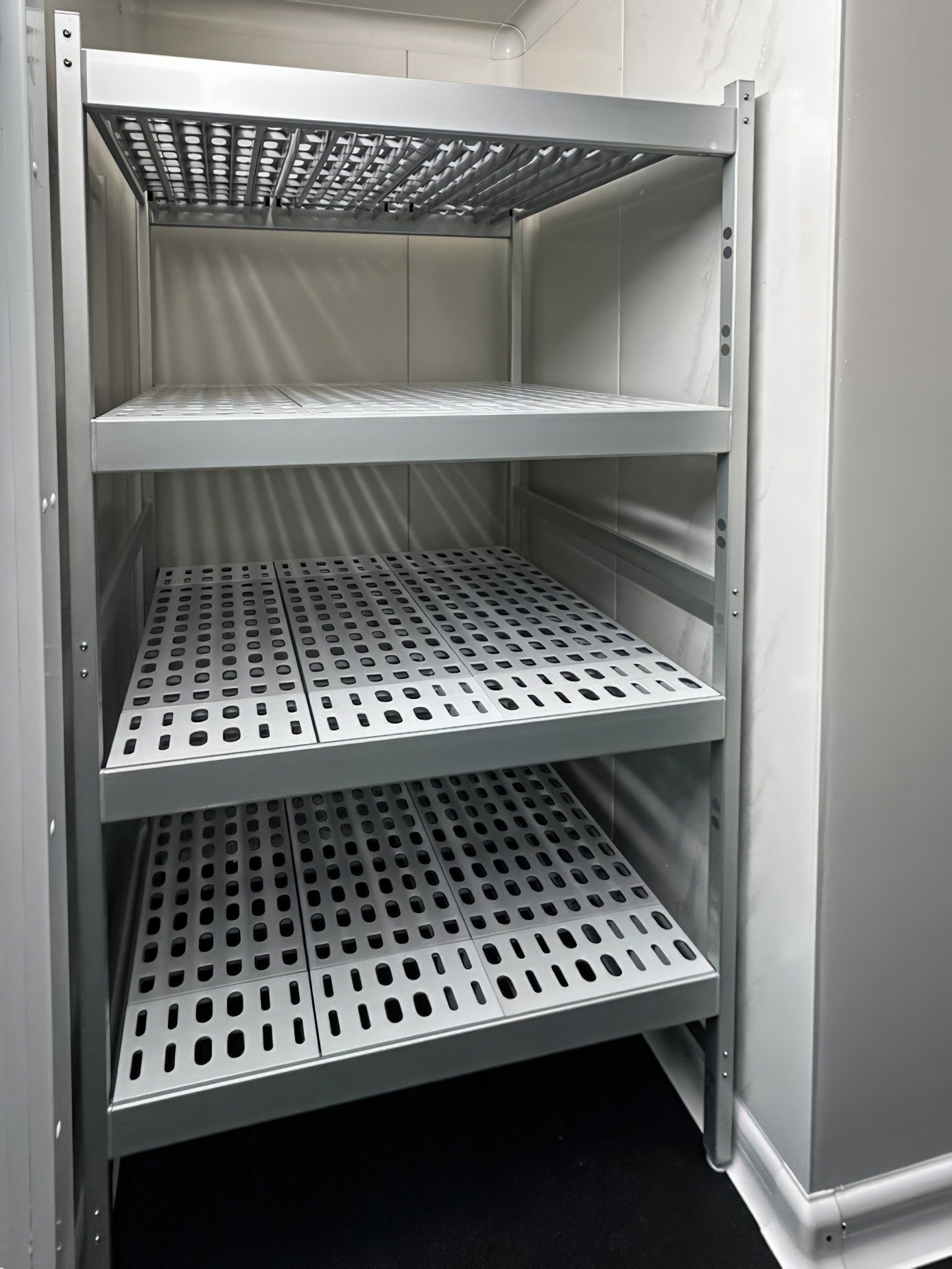
Think about how often your team cleans shelving. If the answer involves groans or shortcuts, you’ve identified a problem. The best systems feature removable tops that slide straight into a professional dishwasher. Smooth surfaces mean residues wash away instead of building up in corners your staff can’t reach. When cleaning becomes straightforward, people actually maintain proper standards instead of cutting corners under time pressure.
Design matters more than most people realize
Run your hand along the frame components-the uprights, traverses, and connectors. Notice any tight gaps, sharp internal corners, or small hollow sections?
Those spots become traps for moisture, food particles, and bacteria.
Quality shelving uses rounded profiles with generous radii. Everything stays cleanable with a simple wipe.
Complex shapes with hidden cavities create contamination risks that auditors notice and that condensation makes worse. In a cold environment, every crevice becomes a hygiene problem.
True modularity saves hours of frustration
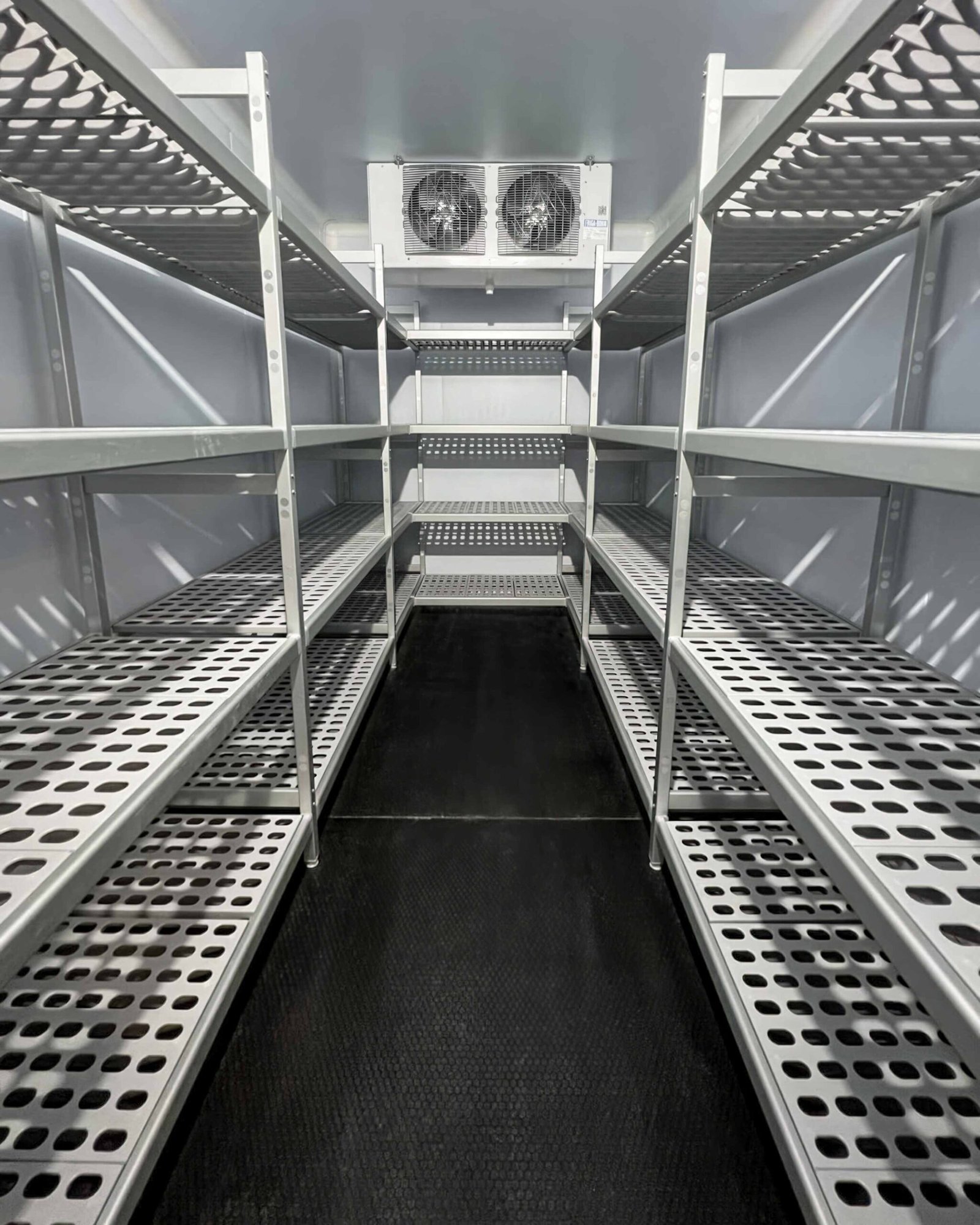
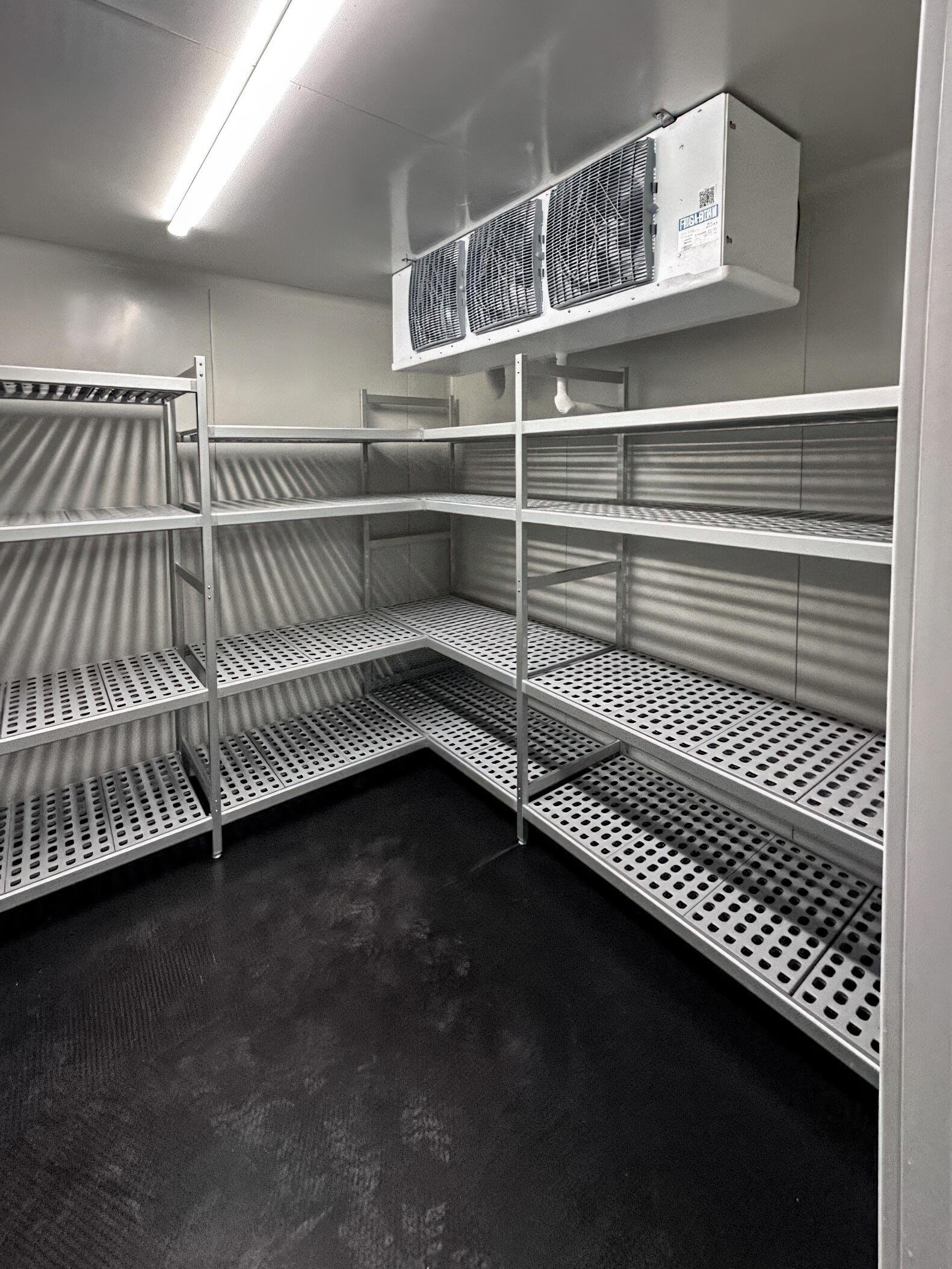
Point to your bottom shelf and ask yourself: can I remove this without touching anything above it? Many systems lock all levels together, forcing you to dismantle half the unit just to deep-clean one section or adjust the layout. That approach kills productivity during busy periods when you can’t afford downtime. Independent shelf levels mean you clean, repair, or reconfigure exactly what you need without unnecessary work.
Materials face harsh conditions daily
Cold rooms test materials in ways that go beyond low temperature. Humidity fluctuates. Defrost cycles create temperature swings. Some operations introduce salt from brines or cured products. Standard steel with basic coatings corrodes within months under these conditions. Look for treated materials—high grade stainless steel, properly treated aluminum, or engineered polymers—that resist both corrosion and oxidation. Surface treatments need to penetrate or bond permanently because any chip or scratch exposes the base metal to accelerated damage.
Ask yourself whether the shelving will still look professional and remain structurally sound three years from now.
Capacity that makes sense
Capacity should be practical, clearly defined, and matched to your shelf span and use-not pushed to look impressive.
Ask for a plain description of how figures are set (per shelf, evenly distributed load, span length, operating temperature) and ensure the lowest‑rated component, such as casters on mobile units, is included in the total.
As a simple check, very long, unsupported spans with neat round-number ratings deserve a second look, and honest figures usually vary by length and configuration rather than staying identical across sizes.
Choose systems that let you specify capacity during design and include easy leveling and spacing adjustments, so performance matches reality day to day.
Proven maker, traceable product
Reliability grows when your shelving comes from a recognized manufacturer with stable supply, documentation, and support throughout its working life.
Look for the maker’s name and model on the product itself, so the installation can be traced to specifications, hygiene approvals, and the exact spare parts you may need later.
Unbranded items make it difficult to link any quality claims or certificates to the actual unit, which complicates compliance and after‑sales service.
Value over time
Shelving that is easy to clean, resists corrosion, and stays stable delivers daily value through consistent hygiene, fewer disruptions, and predictable upkeep.
When comparing options, consider the whole picture-cleaning time, reconfiguration effort, and expected service life-so the system you choose supports performance as well as price.
The difference between adequate and excellent cold-room shelving shows up in daily operations. Excellent systems protect your products, simplify maintenance routines, and support your team’s work every single day. When manufacturers build in quality, hygiene standards, and operational reliability from the beginning, your cold room becomes an asset that contributes to success instead of a space that constantly demands attention.